News from China Energy Storage Network: Chile has recently released strong signals for large-scale energy storage. The 350MW/1409MWh Black BESS project obtained environmental approval, while Enel Chile started construction of the 94MW/372MWh Azabache BESS. On the surface, these are just two project milestones. Behind them, a more important trend is unfolding: Latin America’s energy storage market is shifting from a resource-driven opportunity market to a new phase of accelerated approvals, smooth grid connection, and maturing business models.
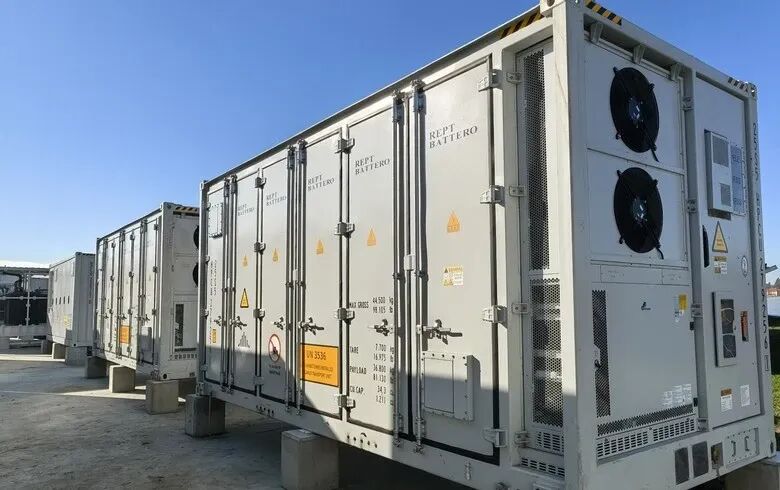
These two high-profile updates from Chile’s energy storage market are highly representative:
- The Black BESS project developed by Mack Energy received environmental approval, with a scale of 350MW/1409MWh.
- Enel Chile, through Enel Green Power Chile, officially began construction of Azabache BESS, sized at 94MW/372MWh.
Viewed against the evolution of Latin America’s power system, these moves send a clear message: Latin America, especially Chile, has entered a window for large-scale energy storage project delivery.
Many observers focusing on overseas energy storage still fixate on the U.S., Europe, and Australia. Yet Chile’s progress shows that the logic of the Latin American market has changed. It is no longer just a story of rich renewable resources and future potential; it now features clearer approval pathways, stronger grid connection demand, and realistic development, exit, and asset operation space. For global developers, EPC integrators, investors, and equipment exporters, this structural shift matters more than individual project approvals.
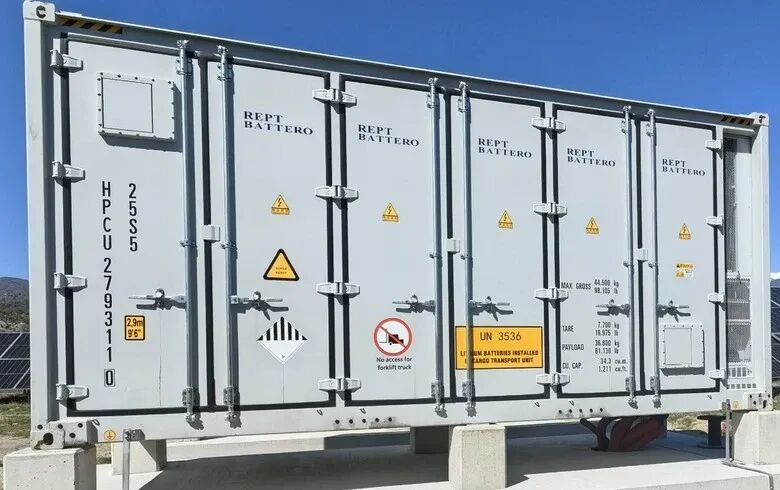
1. Why Chile Has Taken the Lead in Latin America
Chile’s emergence as a Latin American hub for large-scale storage is no accident.
Reason 1: Renewable Penetration Forces Storage Deployment
Northern Chile has world-class solar resources, with strong midday PV generation that suppresses local electricity prices. This creates a clear mismatch: surplus power at noon, high prices in the evening.
The value of Energy Management Systems (EMS) and Battery Energy Storage Systems (BESS) lies in turning this mismatch into dispatchable capacity and converting curtailment risk into tradable flexibility value.
A key feature of Azabache BESS is that it is not an isolated storage unit, but part of a hybrid plant with on-site wind and solar generation, directly turning generation volatility into internal dispatch capability.
Reason 2: Mature Project Development Mechanism
Projects like Black BESS follow a stable path: environmental approval → financing → grid connection → commercial operation. This framework is investor-friendly for international capital.
The real difficulty of large-scale storage is not equipment procurement, but front-end permits, grid access, site conditions, and verifiable long-term revenue.
Public information shows Black BESS includes not only batteries but also a step-up substation and 220kV underground transmission links, meaning the project follows a full utility-scale development model from day one.
Reason 3: Power Systems Are Adding Flexible Resources
Many emerging markets have seen rapid renewable growth but lag in grid flexibility. This creates a gap: high renewable penetration but immature dispatch and market mechanisms — exactly the environment where large-scale storage thrives.
Storage supports peak shaving, time-shift arbitrage, capacity firming, and local grid stability. Its revenue model relies on multiple value streams, not just simple price arbitrage.
2. Latin America’s Large Storage Moves Beyond Pilot Stage
These two projects represent two mainstream, scalable models.
Black BESS: Typical Independent Storage Asset
At 350MW/1409MWh, Black BESS offers approximately 4 hours of storage duration, aligning with global grid-scale standards. Its core challenge is not construction, but market participation.
Four-hour systems are well-suited for evening peak supply, solar time-shifting, and capacity support — business models closely aligned with maturing power markets.
With a total investment of about $220 million, construction is planned to start in December 2026 and commissioning in March 2028, reflecting a standardized, asset-backed development approach.
Azabache BESS: Renewable + Storage Hybrid Plant
Located in the Antofagasta region, Azabache BESS will be integrated with local wind and solar assets to form a wind–solar–storage hybrid plant.
This model does not focus purely on independent arbitrage. Instead, it improves generation profiles, boosts dispatchability, enhances grid friendliness, and optimizes power sales structures to lift the performance of the entire renewable asset portfolio — a more stable strategy for major developers.
The parallel acceleration of independent storage and hybrid plant models in Chile proves the market has moved beyond whether to install storage to which storage model fits which development strategy.
3. Opportunities for Chinese Companies in Chile
The real opportunity in Chile goes beyond selling battery containers and PCS. Chinese players can target four high-value entry points:
1. Equipment Supply
Battery containers, Power Conversion System (PCS), EMS, Battery Management System (BMS), thermal management, fire safety, and station control systems.Latin America needs partners who can deliver full lifecycle solutions — from design and delivery to grid connection and O&M — rather than just equipment suppliers.
2. Project Development
The market supports a clear chain: development → permitting → divestment → M&A exit.Development rights and permits themselves have become valuable assets for companies strong in early-stage acquisition and local partnership.
3. Investment
Chile’s improving approval and construction timelines provide predictable modeling inputs for investors focused on Internal Rate of Return (IRR):
- CAPEX estimation
- Approval timelines
- Commercial operation dates
- Price differentials and dispatch patterns
4. Service & Local Execution
Success requires more than exporting Chinese solutions. It demands compliance with local environmental rules, grid codes, fire codes, tax structures, community engagement, and responsive O&M.Competitive players will combine equipment capability + local delivery + finance + long-term service.
4. Real Challenges in Latin America Should Not Be Underestimated
A hot market does not mean easy projects.
Challenge 1: Time Cost of Approvals & Grid Connection
Front-end permitting remains a key constraint. Delays in land, environmental assessment, or grid coordination extend capital occupancy and harm IRR and cash flow.
Challenge 2: Immature Revenue Mechanisms
Policy and market support for storage are still evolving in Latin America. Revenue from time-shifting, capacity, ancillary services, and hybrid coordination depends on stable, transparent market rules.Strong system demand does not automatically guarantee profitable projects.
Challenge 3: Supply Chain & Localization
Latin America is not a single market. Logistics, exchange rates, tax systems, construction capacity, local EPC resources, and O&M systems vary widely.Long-term success depends on full-lifecycle delivery capability, not one-time pricing.
5. A Broader Signal: Global Large Storage Shifts to Multi-Polar Growth
Chile’s projects signal a global shift: the large-scale storage industry is moving from a U.S.–Europe–Australia centric model to multi-polar deployment.
As renewable penetration rises, more emerging markets face the same challenge: strong daytime renewable generation but insufficient grid flexibility. Chile leads Latin America not only because of resources, but because it is converting system pressure into project delivery.
For Chinese enterprises, global storage strategy must expand beyond subsidy-driven markets to markets with visible, structural system demand. Subsidies drive short-term booms; system need drives long-term orders.
In short, Chile’s two major projects confirm that Latin America’s large-scale storage market has evolved from a thematic story to a developable, constructible, investable, and operable reality.
6. Glossary
- EMS: Energy Management System
- BESS: Battery Energy Storage System
- Hybrid Plant: Integrated power station with multiple generation and storage assets
- PCS: Power Conversion System
- BMS: Battery Management System
- IRR: Internal Rate of Return
- CAPEX: Capital Expenditure
- EPC: Engineering, Procurement and Construction