The global demand for new energy storage is surging, driving the continuous fullness of energy storage cell orders and making the supply and demand of cells tend to be tight. Amid the upsurge of nearly full-load production, leading battery enterprises and second-tier manufacturers have successively increased investment, and the industry has shifted from cautious observation in the early stage to active expansion. This round of energy storage cell expansion is not a simple scale expansion, but shows a trend of technological upgrading: large-capacity cells such as 587Ah and 684Ah have been launched one after another, and long-duration is also an important transformation direction. Notably, while demand is booming and the capacity utilization rate of some enterprises is full, low-price competition and overcapacity of low-end production capacity in the industry are also objective facts. This trend also promotes the rapid development of the home energy storage segment, with a variety of products emerging, such as Home storage all in one recommendation, Auto switch home storage for power cut, and Home stacked lithium battery storage, which have become important growth points in the energy storage industry.
Wang Pengcheng, co-founder and president of Haichen Energy Storage, which ranks second in global energy storage cell shipments, recently told The Paper that the company's orders have been scheduled until 2027, or more precisely, "as of the end of 2027, all the company's orders have been locked in advance." He also frankly pointed out a phenomenon in the industry: although the capacity utilization rate of leading enterprises has exceeded 95%, the current truth is that backward production capacity is surplus while advanced production capacity is seriously insufficient. He emphasized that the industry needs to be vigilant against low-level redundant construction at this stage. When it comes to Haichen Energy Storage's own expansion considerations, Wang Pengcheng stated, "All current production capacity is only advanced production capacity; we will not build redundant production capacity, and will not expand production unless we are in a leading position."
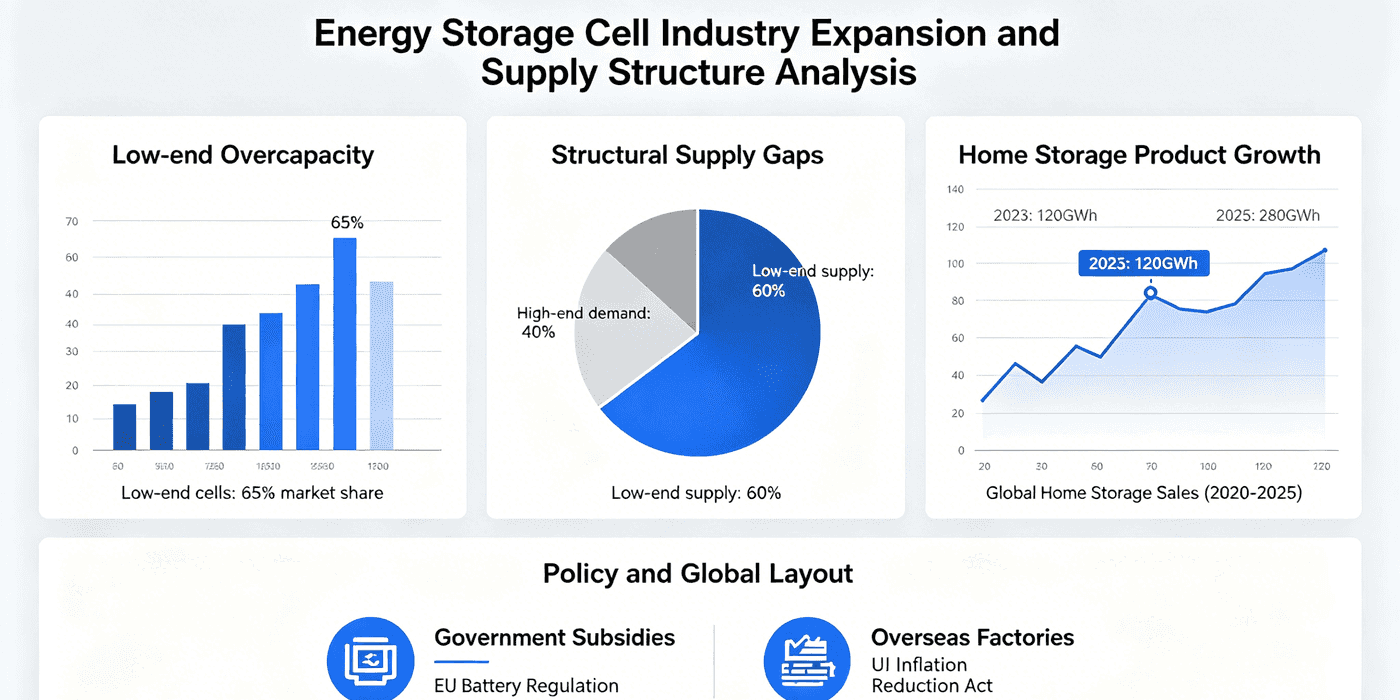
Regarding the reasons for the current structural gap in energy storage cells, Ye Zhen gave a more detailed explanation. In 2026, large-capacity cells will be fully launched, and the technical standard is rapidly switching from 280Ah and 314Ah to 587Ah. "Transforming old production lines into large-cell production lines is actually more costly, so enterprises can only build new production lines for the new large-capacity cells. Building new production lines takes time, and after completion, a certain window period is needed for the capacity ramp-up of the new production lines." This process has created a phased structural gap where "old lines have stopped but new lines have not yet taken over." This structural gap has also further promoted the upgrading and iteration of home energy storage products, with Expandable stacked home energy storage and Wall-mounted solar storage all in one gaining more market attention due to their flexibility and space-saving characteristics.
Ye Zhen, general manager of Haichen Energy Storage's Chongqing base, also talked about the issue of low-level redundant construction. He believes that curbing this problem depends on two things: standards and the market. "Grid-side bidding should clearly give priority to adopting high-capacity and high-safety cells above 500Ah, using technical thresholds to keep backward production capacity out of the market; second, we need to rely on the market to fully implement the peak-valley price difference mechanism and capacity compensation policies, so that long-duration energy storage can be viable through the revenue model rather than winning bids at low prices." Ye Zhen added that currently, there are very few production lines in the market that can achieve high yield and large-scale mass production of kilowatt-hour-level cells. "The short-term supply elasticity is very low, and the cycle is longer, so the state of structural shortage is expected to be longer than the industry's prediction." He also emphasized that Haichen Energy Storage's strategy is to establish both production capacity and technical barriers during the gap period, "turning the window period into the enterprise's moat."
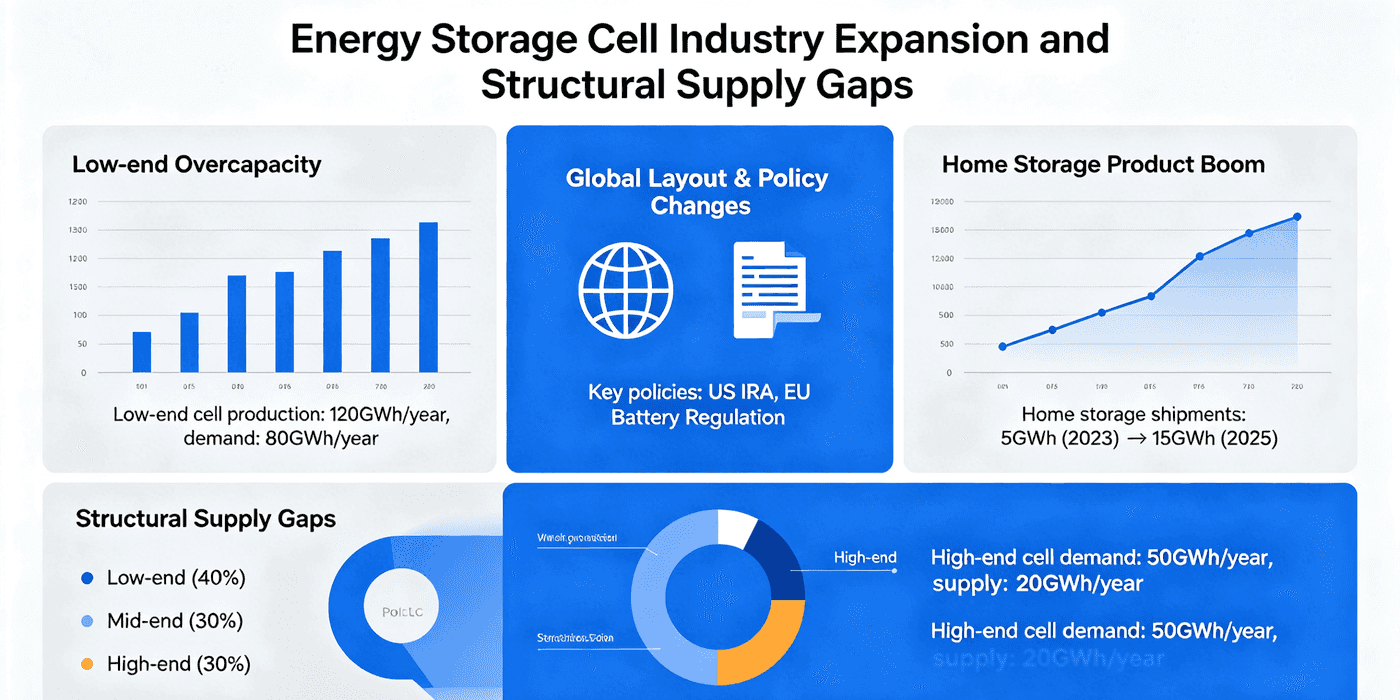
When asked whether the energy storage industry will repeat the mistakes of the photovoltaic industry of "first expansion, then reshuffling", Ye Zhen responded at a media briefing that the underlying logic of the two is completely different. "The dilemma of photovoltaic industry back then was essentially driven by subsidies, which was 'land grabbing', but today's energy storage is driven by the rigid demand of the power grid, and the market is actually placing orders; it is not a false prosperity." For battery manufacturers including Haichen Energy Storage, accelerating "going global" is accompanied by a series of challenges. According to the Announcement on Adjusting the Export Tax Rebate Policy for Photovoltaic and Other Products issued by the Ministry of Finance and the State Taxation Administration in January this year, from now until December 31, 2026, the value-added tax export rebate rate for battery products is 6% (down from 9% to 6% starting from April 1); starting from January 1, 2027, the value-added tax export rebate for battery products will be fully cancelled. Despite the high proportion of its own overseas business, Wang Pengcheng said the policy is still within expectations.
Regarding the industry impact of the above new policies, he believes it is conducive to healthy competition in the industry and the ultimate return of value. "The export tax rebate will compress the space for low-price competition of low-end production capacity, and reversely force the shift from price wars to competition in technology and quality." Wang Pengcheng also believes that this policy is conducive to optimizing the export pricing mechanism, especially for leading enterprises, which will have pricing space. In addition, it will promote enterprises to accelerate their global layout in a rhythmic and orderly manner. In the field of energy storage going global, the fluctuations in geopolitics and the increasing regional tariffs have brought uncertainties to the overseas market, which are common risks currently visible in the market. Wang Pengcheng said that uncertainty itself means opportunities, and the ability of international localization is the core capability of enterprises going global. This global layout trend has also driven Chinese home energy storage manufacturers to expand overseas, with 15kWh solar battery storage home China manufacturer, Off grid solar battery storage for villa China factory, and China factory wall mount solar battery for home gaining wide recognition in the international market.
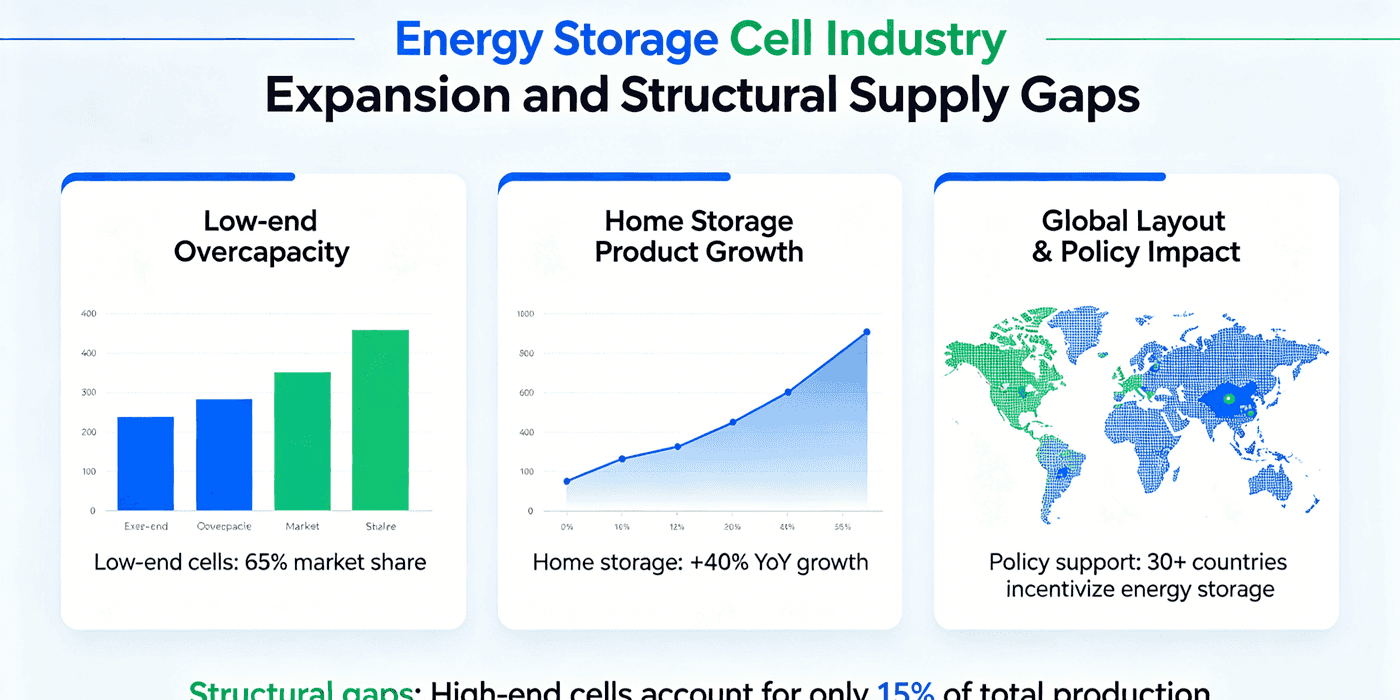
Up to now, Haichen Energy Storage has laid out its first overseas energy storage system manufacturing plant in Texas, the United States, which achieved "shipment" and moved towards "mass production and delivery" in August last year. The plant is planned to have an annual output of 10GWh battery modules and systems. In addition to the American market, Haichen Energy Storage has planned to build an integrated plant in Europe. On April 15 this year, Haichen Energy Storage signed a memorandum of intent on strategic investment cooperation with the government of Navarre Autonomous Region, Spain. The first phase of the project is planned to have a total investment of about 400 million euros to build a large-scale energy storage battery and system manufacturing plant in Navarre, Spain. Wang Pengcheng revealed that Haichen Energy Storage's Spanish plant is expected to be put into production next year. "We firmly believe that the international market must be diversified, not just a single market," he told The Paper, adding that for the entire overseas market, both the United States and Europe, Haichen focuses on grid-level system delivery. As for the overall business trend, he summarized, "It must be an integrated full-scenario solution, the proportion of the system will definitely be higher and higher, including the base being an integrated base."
According to statistical data released by InfoLink, the global energy storage cell shipments in 2025 reached 612.39 GWh, a year-on-year increase of 94.59%. The annual shipments showed a quarterly upward trend, with single-quarter shipments exceeding 200 GWh in the fourth quarter. The industry concentration CR10 was 88.8%, which was below 90% for two consecutive quarters, indicating that second and third-tier manufacturers have achieved significant growth, and the prosperity has spread from leading manufacturers to the entire industry. Among them, Haichen Energy Storage ranked second in this shipment list, surpassing Eve Energy (300014.SZ), the runner-up of the previous year. At the company's ecological day event in 2025, Haichen Energy Storage stated that it will promote the levelized cost of storage (LCOS) of energy storage to enter the "10-cent era" within 5 years. Wu Zuyu, founder and chairman of Haichen Energy Storage, mentioned at that time that only when the sum of the power generation cost of wind and solar green power, power transmission cost, and energy storage cost is truly lower than the power cost of traditional energy can the era of full marketization of energy storage come, which corresponds to a super-large industry with a scale exceeding 100 trillion yuan. This huge market potential has further boosted the development of the home energy storage sector, and Residential solar energy storage China factory direct and Balcony solar home battery storage China manufacturer have become important forces driving the growth of the industry with their cost advantages and product advantages.