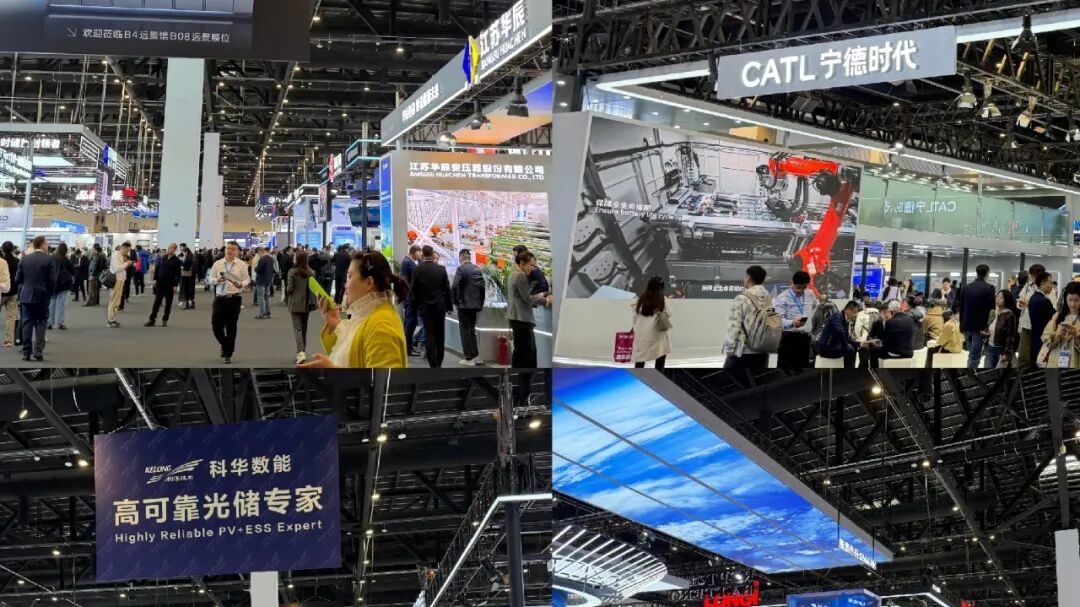
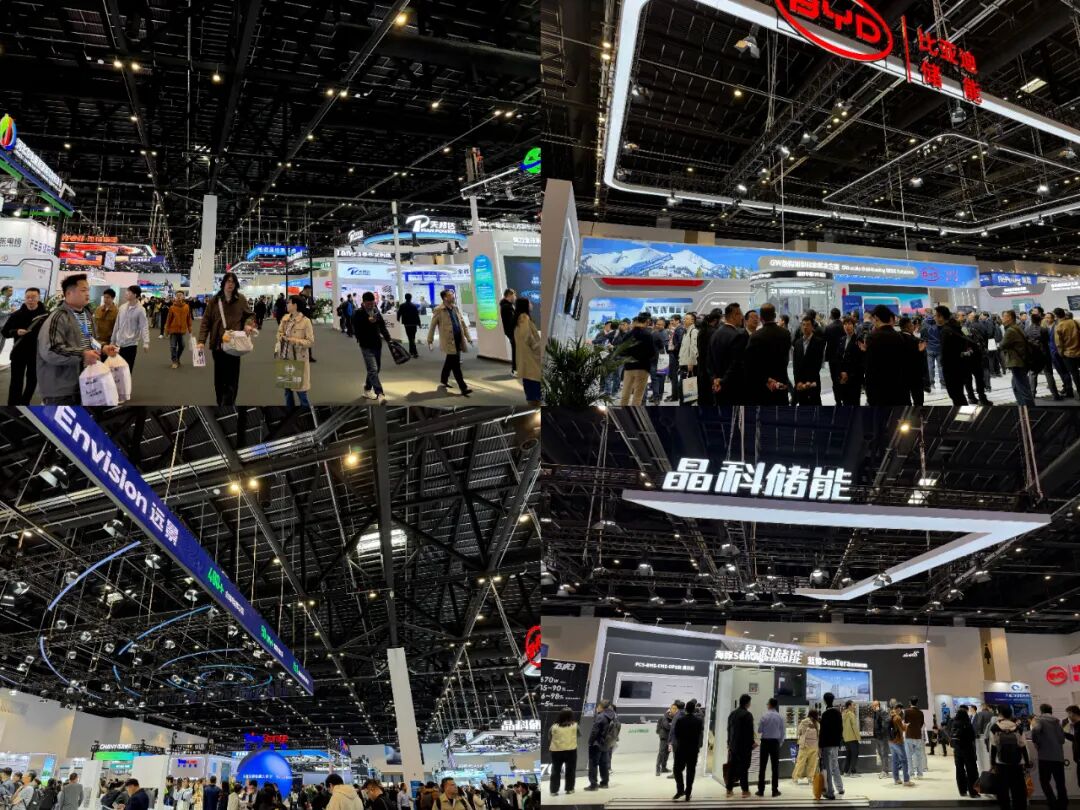
In April, the 14th Energy Storage International Summit and Exhibition (ESIE 2026) wrapped up successfully at the Capital International Exhibition Center in Beijing.
A tour of the exhibition hall revealed a pronounced shift in industry trends. While large-scale grid‑scale energy storage containers that dominated the spotlight in previous years remained on display, the most prominent entrance zones and heavily attended presentation stages centered on an entirely new theme.
From grid‑forming energy storage and full‑stack in‑house R&D to GWh‑class intelligent storage power stations and power‑computing synergy solutions, nearly all leading enterprises converged on one narrative: Artificial Intelligence Data Centers (AIDC) are emerging as the next critical battleground for the energy storage sector.
This shift responds to an inescapable industry dilemma. According to the 2026 China Energy Storage Industry White Paper released by the China Energy Storage Alliance (CNESA) during the event, China’s cumulative installed capacity of new energy storage surpassed 100 GW by the end of 2025, capturing more than 50% of the global market share for the first time.
“Installed capacity has boomed, but profits have not kept pace,” remarked a marketing executive from an exhibiting energy storage firm. Margins from peak‑valley arbitrage at traditional independent energy storage stations are narrowing sharply, and equipment price wars have intensified to fractional levels. Without a breakthrough, numerous small and medium‑sized enterprises risk being eliminated.
Power‑computing synergy—the deep integration of AI data centers and power systems—has emerged as the industry’s primary path to breakthrough growth.
Energy Storage Evolves from Backup Power to Mission‑Critical Infrastructure
Traditional internet data centers (IDC) feature relatively steady power demand, but GPU‑centric AIDC operates under fundamentally different requirements.
A veteran energy storage system specialist noted that GPU clusters generate frequent, extreme load fluctuations: task distribution and batch initiation during model training can trigger megawatt‑scale power swings within milliseconds. Conventional energy storage systems respond on a second‑ or minute‑level timescale, but computing scenarios demand millisecond‑level responsiveness. Furthermore, computing hardware is highly sensitive to voltage and frequency deviations; even minor disturbances can disrupt training workflows, distort computational outputs, or damage hardware components.
In this context, energy storage is the only solution that delivers millisecond response, backup capacity exceeding 30 minutes, and full alignment with green power mandates.
“The essence of artificial intelligence is GPU plus electricity,” stated Tian Qingjun, Senior Vice President of Envision Group, during media interviews at the summit.
The mismatch between computing demand and power availability has grown acute in the U.S. market. Data center site selection, once focused on network nodes and land costs, now prioritizes access to stable, high‑quality power resources. This shift has elevated energy storage from a backup power source to a core dispatch hub, making it indispensable infrastructure for AI computing.
An energy storage integrator revealed at the exhibition that the global AIDC‑targeted energy storage market is led by the U.S. and China. The U.S. market is driven by private giants including Microsoft and Lockheed Martin, with robust demand and strong purchasing power. China’s market is supported by national‑level computing hubs such as the Eastern Data, Western Computing initiative, marked by strong policy backing.
This trend has moved from concept to concrete orders. Multiple enterprises launched AIDC‑tailored energy storage solutions at the event:
- Trina Solar unveiled a full‑scope AIDC integration solution featuring end‑to‑end source‑storage grid‑forming and load‑side efficiency, with grid‑forming technology validated in South Australia, Chile, and other regions.
- Nandu Power released a backup power system purpose‑built for AIDC, utilizing high‑power LiFePO4 battery cells that support 10C ultra‑high‑rate discharge and zero‑latency response.
“Green power penetration and electricity cost define data center competitiveness,” explained Qian Jing, Vice President of JinkoSolar. Technology leaders including Google, Microsoft, and Apple already rely on self‑developed PV assets and procured green power to supply their data centers.
AIDC Redefines Competitive Dynamics in Energy Storage
AIDC has unlocked massive new demand, but sustainable monetization requires a new playbook.
An industry analyst explained: “A standard power supply model yields narrow per‑kWh margins. However, deep participation in power market operations and zero‑cost green power sourcing can multiply value by nearly 10x.”
When electricity is coupled with computing power, it transitions from a commodity to high‑value production capital—requiring highly intelligent energy storage systems.
At the exhibition, HyperStrong launched its GWh‑class HyperStation Intelligent Storage Solution, anchored by an AI agent that unifies equipment operational data and power market trading rules to enable cross‑market, multi‑asset intelligent trading decisions. The storage station proactively identifies optimal charge‑discharge windows rather than passively executing dispatch commands.
“All value is fully quantifiable,” noted Zhang Jianhui, Chairman of HyperStrong. Performance gaps in efficiency, lifespan, and reliability become evident within months; power market trading prowess shows results even faster—in just one month. For a project with a 1‑billion‑yuan investment, a 1% increase in IRR generates 10 million yuan in annual returns and 100 million yuan over a decade. Against this value scale, customers no longer fixate on trivial per‑unit price differences.
This logic is redefining industry competition. Contest is no longer about hardware specs or pricing, but about deep power market integration, mastery of computing‑grade power quality requirements, and delivery of quantifiable ROI improvements. Firms that deliver these outcomes capture pricing power and escape the price war trap.
“System integrators reliant on simple assembly will vanish rapidly over the next two to three years,” Tian emphasized.
The industry now demands full‑stack in‑house R&D—vertical integration across battery cells, systems, and operations. Only firms with manufacturing, system R&D, and operational capabilities will thrive in high‑reliability new‑load scenarios.
Leading enterprises launching AIDC solutions uniformly highlight full‑stack capabilities: from battery material selection and coordinated optimization of BMS, PCS, and EMS to AI‑driven power trading algorithms. Vertical industrial integration has replaced module‑based assembly as the core competitive barrier.
Becoming a Deep Partner in Computing Power Production
Asked about the next high‑value energy storage segment beyond AIDC, Zhang Jianhui offered a long‑term framework:
“The highest‑value energy storage scenarios will align with the fastest‑growing electricity demand sectors over the next five years. By the end of the 15th Five‑Year Plan, computing centers will lead load growth, with AI power demand surging hundreds of times,” he stated. HyperStrong has strategically positioned itself in this segment. Emerging killer applications in consumer and enterprise markets will drive exponential growth in computing power and corresponding electricity use—this is the next high‑value frontier.
Zhang stressed that equipment sales represent only the first layer of value. True premium extraction comes from deep integration into high‑value computing production scenarios.
Entering computing center operations to deliver ultra‑high power quality and extending into token‑level production unlocks superior margins. For example, optimized energy storage solutions can reduce power costs from 0.7 yuan/kWh to 0.5 yuan/kWh in Shandong’s power market, creating substantial value‑redistribution opportunities—conditional on delivery of fully safe, stable, and reliable power.
Falling PV costs are making green power direct‑connect models economically viable. PV is already cheaper than coal‑fired power; PV‑storage systems are projected to reach grid parity by 2027–2028. For data centers, power‑computing synergy, direct green power supply, and green power aggregation are irreversible trends.
In short, future winners in energy storage will be neither the top battery manufacturers nor the lowest‑cost integrators, but firms that master power market trading and deeply understand computing production workflows.
Tian offered an optimistic outlook: “Two years ago, no one foresaw AIDC becoming a major energy storage battlefield. More new scenarios will emerge. Energy storage will become ubiquitous and omnipresent.”
A Soochow Securities research report noted that the AIDC infrastructure wave is reshaping data center siting logic and spawning source‑grid‑load‑storage integrated systems. Abundant wind and solar resources in western China, paired with the Eastern Data, Western Computing strategy, are forming closed loops of green power generation, on‑site consumption, and computing output. Projects are already underway in key hubs including Zhongwei (Ningxia) and Ulanqab (Inner Mongolia).
A telling detail from ESIE 2026: financial and operational terms—including IRR modeling, power trading strategies, and token value distribution—appeared more frequently than traditional hardware metrics such as energy density, cycle life, and safety certifications.
This signals a decisive divergence in competitive pathways. As power‑computing synergy scales, AIDC’s high‑premium market takes shape. Manufacturing capability is merely a ticket to entry; operational prowess is the true differentiator. Firms that transcend price wars and deeply engage in computing value creation will seize industry leadership in this transformative era.