I. Core Functions and Classification
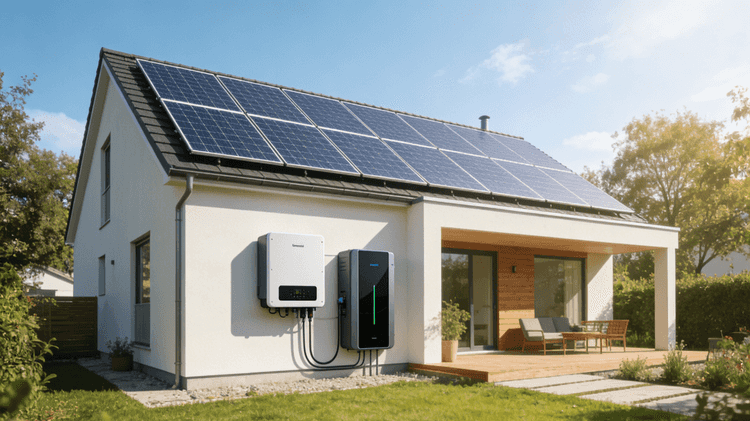
Home energy storage equipment serves as the "intelligent energy hub" for both household and outdoor scenarios. Its core functions revolve around power storage, power supply, and intelligent management, with tiered designs tailored to diverse needs.
1. In-depth Analysis of Core Functions
Energy Storage and Charging/Discharging: Stores electricity during off-peak tariff periods or peak photovoltaic generation, and discharges power during peak hours or power outages to achieve peak-valley arbitrage and emergency backup power. It supports direct photovoltaic charging, grid charging, and generator supplementary power.
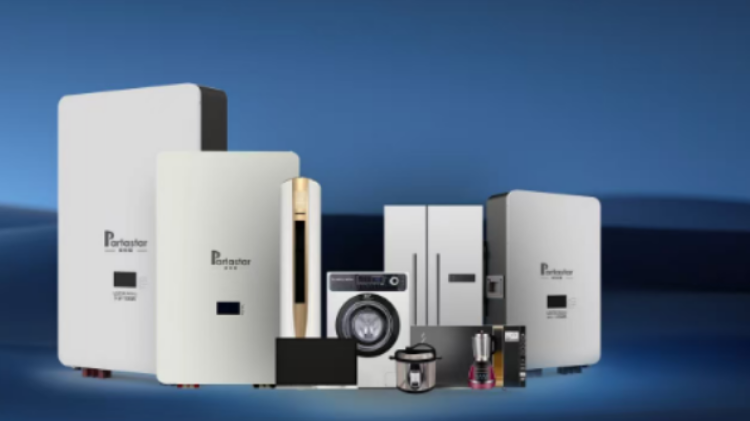
Multi-Device Compatible Power Supply: In household scenarios, it covers the entire home or critical loads (air conditioners, refrigerators, routers); in outdoor scenarios, it adapts to camping lights, drones, cooking utensils, vehicle-mounted devices, and more.
Intelligent Safety Protection: The BMS (Battery Management System) controls temperature and prevents overcharging/over-discharging, while the EMS (Energy Management System) enables automatic scheduling. Some models are equipped with integrated fire protection modules.
Flexible Switching and Expansion: Seamless grid-tied/off-grid switching (response within 10ms of power failure), supports modular capacity expansion to adapt to different house types and outdoor scenarios.
2. Product Classification (by Scenario)
| Type | Core Positioning | Capacity/Power Reference | Adapted Scenarios |
| All-in-One Household Energy Storage Unit | Core of whole-house energy | 5-30kW, 5-150kWh | Families with photovoltaics/peak-valley electricity pricing, areas with frequent power outages |
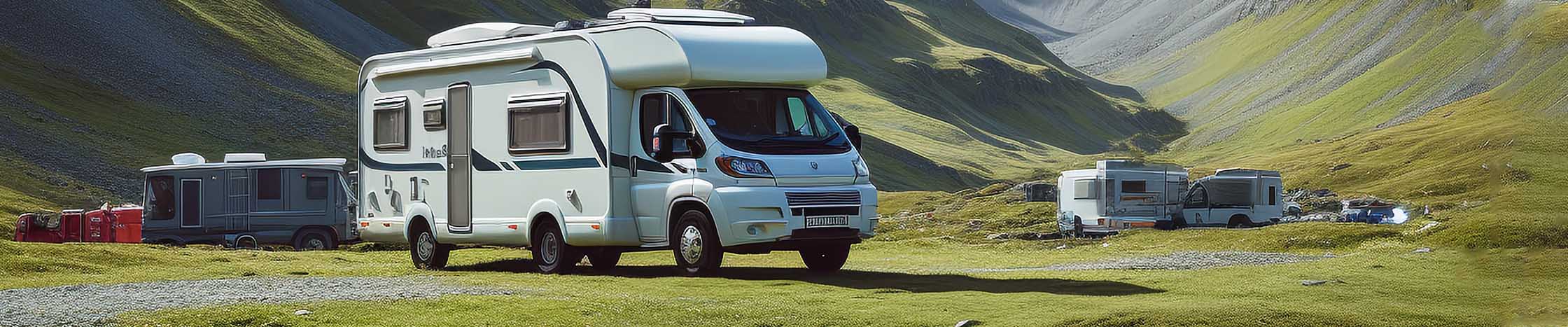
| Portable Energy Storage Power Supply | Main force for outdoor emergencies | 1-5kWh, 1000-3000W | Camping, short-distance travel, emergency backup |
| PV-Storage All-in-One Unit | Green energy self-circulation | 3-15kW | Matching rooftop photovoltaics, families pursuing energy independence |
| Outdoor PV-Storage Equipment | Active sun-tracking energy | Portable models + sun-tracking robots | Long-distance camping, field operations |
II. Development History (1990s-2026)
1. Embryonic Stage (1990s-2010): Dominated by lead-acid batteries with small capacity and short service life, only used for small-scale emergency backup, limited to laboratories and special demand scenarios.
2. Growth Stage (2011-2020): Lithium iron phosphate replaced lead-acid batteries, with cycle life increased to over 3,000 cycles. Prototypes of PV-storage all-in-one units emerged, starting to match household photovoltaic systems, and gained early popularity in Europe and North America.
3. Explosive Growth Stage (2021-2025): Driven by policies (EU Fit for 55, U.S. IRA) and technological iteration, the residential energy storage market grew by over 30% annually. AI-BMS and integrated fire protection became standard features, and the domestic market rose rapidly.
4. Maturity Stage (From 2026 Onwards): Commercialization of all-solid-state/sodium-ion batteries, popularization of AI agent scheduling, and product upgrades toward integration, intelligence, and scenario-based design, blurring the boundaries between household and outdoor equipment.
III. Most Advanced Equipment in 2026
In 2026, core technological breakthroughs focus on three directions: material upgrading, intelligent evolution, and scenario innovation. Below are benchmark products and technologies:
1. Flagship Household Models
Jinghe Energy 60Ah All-Solid-State Battery (Premiered at AWE2026)
Core Highlights: Doubles the power capacity in the same volume, supports 1-2C fast charging, and improves assembly efficiency by 80%; equipped with Jinghe AI-BMS agent that actively predicts faults and optimizes scheduling, significantly enhancing service life and safety.
GoodWe ET G2 Series + Lynx Home F G2 Combo
Core Highlights: Three-phase high-voltage adaptation for large residences, off-grid switching in <10ms, supports 1.6x photovoltaic over-provisioning; modular stacking for flexible capacity expansion from 9.6 to 28.8kWh, IP65 protection, and ultra-quiet design.
Pylontech Fidus Battery Plus
Core Highlights: Standard 16kWh capacity, expandable up to 1440kWh; operates in a wide temperature range of -20℃ to 55℃, built-in active fire protection module, C5-M corrosion resistance, adapting to diverse regional climates.
2. Cutting-edge Outdoor Models
Huabao New Energy PV-Storage Mars Robot (CES2026)
Core Highlights: The world's first mass-produced PV-storage robot, equipped with foldable photovoltaic panels and an intelligent sun-tracking system, autonomous navigation and obstacle avoidance, sun-tracking when powered and automatic recharging when low on power; acts as an energy butler in home courtyards, provides on-the-go power for outdoor camping, and supports power supply for smart devices such as Starlink and robotic dogs.
Hichen Energy Storage HeroEE LIGHT 1
Core Highlights: 3-in-1 design (inverter + battery + MPPT), plug-and-play; 2-hour AC fast charging, 3-hour solar fast charging, cycle life of 11,000 cycles, balancing portability and long service life.
3. Core Technology Trends in 2026
Material Revolution: All-solid-state batteries feature improved energy density and enhanced safety; sodium-ion batteries enter the mid-to-low-end market, alleviating pressure on lithium resources.
Deep AI Integration: AI-BMS achieves millisecond-level scheduling, boosting efficiency by 20% and reducing costs by 15%; AI agents combine weather data and electricity consumption habits to automatically optimize charging and discharging strategies.
Scenario Optimization: Household models upgrade toward "energy independence", while outdoor models evolve toward "active sun-tracking and intelligent following", with product forms better adapted to both household and outdoor dual scenarios.
IV. Purchase and Usage Recommendations
1. Household Purchase: Prioritize PV-storage all-in-one units matching rooftop photovoltaic capacity, focusing on 10ms switching speed, IP65 protection, and active fire protection functions; combine peak-valley electricity pricing and subsidy policies to reduce long-term costs.
2. Outdoor Purchase: Choose portable energy storage + foldable photovoltaic panels for camping; select PV-storage robots for long-distance/field operations; focus on cycle life (≥6,000 cycles), fast charging efficiency, and wide temperature adaptation (-10℃ to 50℃).
3. Usage Tips: Regularly clean photovoltaic panels and maintain connectivity between BMS and APP; avoid full charging and discharging, and calibrate power capacity periodically; keep away from damp and high-temperature environments during outdoor use, and take proper waterproof and sun-protection measures.